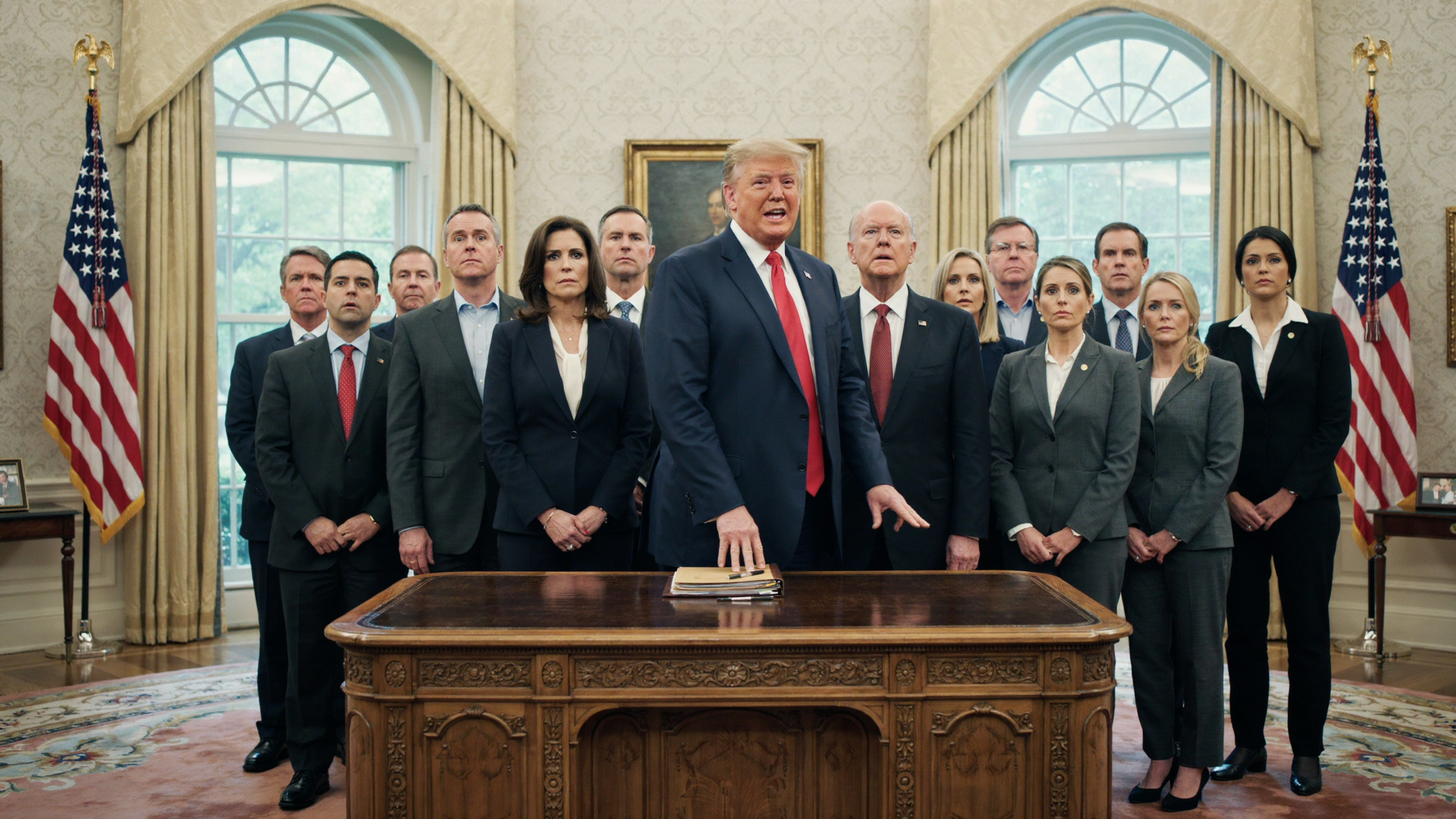
Impeachment is a constitutional process for accusing a president of serious misconduct, not an automatic removal from office. In 2019, the House charged Donald Trump with abusing his power over Ukraine and obstructing Congress; the Senate acquitted him in 2020. After the January 6 Capitol attack, the House impeached him again for inciting insurrection. The Senate again fell short of conviction, even as seven Republicans joined Democrats. The outcomes revealed limits-and lasting consequences-for presidential accountability. Learn Who Is in the Trump Hall of Shame: Trump Hall of Shame
What Does Impeachment Mean for a President?
What does impeachment mean for a president? It means the House of Representatives has formally accused a president of serious misconduct; it does not, by itself, remove the president from office. The process begins when the House considers articles of impeachment and votes on whether to approve them. A simple majority is sufficient for impeachment, which functions as a constitutional charge rather than a final judgment.
The case then moves to the Senate, where senators conduct a trial. The chief justice presides when the president is tried, and conviction requires a two-thirds vote of senators present. Only conviction results in removal. The Removal process may also include a separate Senate vote barring the former president from holding federal office again.
If a president is removed, resigns, dies, or becomes unable to serve, constitutional rules govern presidential succession. The vice president assumes the presidency, preserving continuity of government. For citizens, impeachment is consequently both an accountability mechanism and a structured safeguard, not a declaration of guilt or an automatic transfer of power.
What Led to Trump’s First Impeachment?
In July 2019, a call between President Donald Trump and Ukrainian President Volodymyr Zelensky became central to concerns about U.S. policy toward Ukraine. A whistleblower complaint about the call prompted congressional scrutiny of Trump’s request that Ukraine investigate Joe Biden and his son. The House inquiry examined whether the request constituted an abuse of power, leading to Trump’s first impeachment.
The Ukraine Call
The events that led to Donald Trump’s first impeachment began with a July 25, 2019, phone call with Ukrainian President Volodymyr Zelensky. The Call timeline followed months of U.S. policy discussions as Ukraine faced Russian aggression and sought American support. During the conversation, Trump asked Zelensky to investigate former Vice President Joe Biden and his son Hunter, who had served on the board of a Ukrainian energy company. Trump also referred to a 2016 election-related theory and emphasized that the United States had been “very good” to Ukraine. Kyiv had sought a meeting with Zelensky at the White House, but it had not been scheduled. The call’s juxtaposition of security assistance and requests for investigations raised questions about presidential authority, foreign policy, and the use of public office for personal political benefit. Those issues framed the dispute that followed.
Whistleblower Complaint
After the July 25 call, an intelligence community whistleblower filed a complaint alleging that Trump’s request for investigations raised concerns about possible abuse of presidential power. The complaint, submitted in August 2019, drew on information from other U.S. officials rather than direct participation in the call. Its account prompted the intelligence community inspector general to review the matter and find it credible and urgent under the applicable process.
The whistleblower’s identity was withheld to protect the source and avoid retaliation. Although public discussion often described the disclosure as an anonymous tip, the complaint was formally submitted through established channels, not as an unverified public accusation. In September, Congress received the complaint after a dispute over how it was handled. Its release brought the Ukraine call into wider public view and set the stage for congressional inquiries into the administration’s conduct.
Abuse of Power Allegations
As Congress examined the whistleblower complaint in September 2019, attention turned to whether Trump had used presidential authority to pressure Ukraine. Investigators focused on a July 25 call with President Volodymyr Zelensky, during which Trump asked Ukraine to investigate Joe Biden and his son. The request came as the administration withheld nearly $400 million in congressionally approved military aid and delayed Zelensky’s White House visit. Democrats argued that this timing suggested Trump was using public resources to seek political advantage over a potential 2020 rival. The White House said the call was appropriate and denied a quid pro quo. After hearings and document reviews, the House Judiciary Committee concluded that Trump had solicited foreign interference in an election. The allegations raised questions of executive accountability and the role of constitutional safeguards.
Why Was Trump Impeached Over Ukraine?
In 2019, a whistleblower complaint and a subsequent House investigation focused attention on President Donald Trump’s dealings with Ukraine. The inquiry followed a July call with Ukrainian President Volodymyr Zelensky, during which Trump raised investigations involving Joe Biden, then a potential political rival, and his son. At the time, the United States was providing Ukraine with military assistance as it faced Russian aggression. The administration had temporarily withheld nearly $400 million in congressionally approved aid, a decision that sharpened questions about the purpose and timing of the president’s requests.
The controversy drew attention because it joined electoral politics, national security, and the use of presidential authority. Lawmakers examined whether a president could condition diplomatic engagement or assistance on a foreign government’s actions concerning a domestic political opponent. Their debate weighed constitutional standards against foreign policy oversight, while raising broader concerns about public trust and the boundaries of executive power. The House concluded that the circumstances warranted impeachment, setting up a Senate trial and a national argument over accountability.
What Did the House Charge in 2019?
When the House approved impeachment in December 2019, it charged President Donald Trump with abuse of power and obstruction of Congress. The two impeachment articles followed a House investigation into his dealings with Ukraine. Investigators examined Trump’s request that Ukraine announce investigations involving Joe Biden, then a potential 2020 rival, and his withholding of congressionally approved military aid while that request was under scrutiny.
The first article alleged that Trump used presidential authority to solicit foreign interference in the election for personal political benefit. It also cited his pressure on Ukrainian President Volodymyr Zelensky and his administration’s efforts to conceal the conduct. The second article accused Trump of obstructing the House inquiry by directing officials not to cooperate and by withholding documents.
The charges marked the culmination of months of investigation and debate over presidential accountability. The House approved the abuse-of-power article on December 18, 2019, and the obstruction article the same day, making Trump the third president impeached.
Why Did the Senate Acquit Trump in 2020?
After the House impeached Trump in December 2019, the Senate acquitted him in February 2020, largely along party lines. The charges concerned abuse of power over his dealings with Ukraine and obstruction of Congress. In January, senators began a Constitutional trial, hearing arguments from House managers and Trump’s defense team. The central dispute was whether Trump had improperly pressured Ukraine to investigate Joe Biden while withholding congressionally approved military aid.
Senators also confronted a jurisdictional debate: Trump’s lawyers argued that impeachment could not stand without an indictable crime, while House managers maintained that the Constitution permitted removal for serious abuses of office. The Senate voted against calling additional witnesses, limiting the evidentiary record. On February 5, it rejected both articles. The abuse-of-power article received 48 guilty votes and 52 not-guilty votes; obstruction received 47 and 53, respectively. Because conviction required a two-thirds majority, neither article passed, and Trump remained in office.
How Did the First Trial Affect Party Politics?
The Senate’s February 2020 acquittal sharpened partisan divisions that had shaped the trial from the start. Nearly all Republican senators voted to acquit, while every Democrat and independent aligned with the Democratic caucus voted to convict. The result reinforced Senate polarization and encouraged both parties to present the proceedings as evidence of the other side’s excesses.
In the weeks that followed, Republican leaders emphasized the acquittal and defended Trump’s conduct, while Democratic lawmakers continued to argue that he had abused his office. These competing accounts hardened partisan identities among elected officials and many voters. Rather than producing broad agreement about presidential accountability, the trial became another marker of party loyalty.
The proceedings also underscored a wider partisan realignment already underway: Republicans increasingly rallied around Trump, while Democrats consolidated opposition to his presidency. That alignment did not erase internal disagreements, but it narrowed the space for cross-party cooperation on the impeachment itself. The first trial therefore left party politics more defined by shared allegiance and mutual distrust.
What Led From the 2020 Election to January 6?
As the 2020 election approached, Trump repeatedly cast doubt on the reliability of mail-in voting and suggested that defeat would indicate fraud, laying the groundwork for disputes over the result. After ballots were counted, Joe Biden won both the popular vote and the Electoral College. Trump and his allies challenged results in several states, but courts and election officials found no evidence sufficient to change the outcome. State officials certified their results, and the Electoral College voted for Biden in December.
In the weeks before Congress met to complete election certification on January 6, Trump continued to claim the election had been stolen. His campaign and supporters pressed lawmakers to reject some states’ electoral votes, while courts dismissed further challenges. On January 6, Congress convened as planned. A crowd gathered in Washington after Trump addressed supporters; some entered the Capitol, interrupting proceedings. The breach exposed failures in Capitol security and delayed the constitutional count before lawmakers reconvened that evening.
Why Was Trump Impeached Again After January 6?
Congress reconvened on January 6, 2021, and certified Joe Biden’s victory, but the Capitol attack prompted a separate question about Trump’s responsibility for the events. As lawmakers evacuated and later returned, they faced an assault that interrupted a constitutional process and endangered members, staff, and others inside the building. Capitol security failures became part of the wider inquiry, but the impeachment question centered on Trump’s conduct before and during the attack.
In the weeks beforehand, Trump repeated false claims that the election had been stolen and urged supporters to come to Washington. At a rally that morning, he again challenged the result and told the crowd to march toward the Capitol. His critics argued that this rhetoric helped incite the violence and that his response as the attack unfolded failed to meet the duties of his office. The House’s decision to impeach him again also raised questions about accountability and post presidency eligibility, as Congress considered how to address conduct it viewed as a threat to democratic government.
How Did the House Vote on the Second Impeachment?
On January 13, 2021, the House voted 232-197 to impeach Donald Trump for incitement of insurrection. The vote largely followed party lines, with all Democrats and 10 Republicans supporting impeachment. Those Republican defections made Trump the first president impeached twice.
The Final Vote
The House voted 232-197 to impeach President Donald Trump on January 13, 2021, making him the first U.S. president to be impeached twice. The vote followed the January 6 attack on the Capitol and charged Trump with incitement of insurrection. Members of both parties supported the resolution, and ten days remained in his presidency. Its timing made the proceeding unusual: the House acted after Trump’s term was nearly over, but the Senate trial would begin later.
| Measure | Result |
|---|---|
| Impeachment vote | 232-197 |
| Votes needed | 217 |
| Republican votes for | 10 |
| Article approved | Incitement of insurrection |
The Senate later acquitted Trump; the Senate vote margin fell short of conviction. The acquittal aftermath left the political consequences contested, even as the House’s historic action entered the record.
Party-Line Breakdown
The 232-197 result reflected broad Democratic support for impeachment alongside a notable Republican break from party ranks: ten House Republicans joined all voting Democrats in approving the article. The vote took place on January 13, 2021, one week after the January 6 attack on the Capitol, and marked the first time a U.S. president had been impeached twice. House members considered a single article charging Donald Trump with incitement of insurrection. The outcome showed how sharply the chamber divided over responsibility for the attack and the limits of presidential conduct. Although the article passed with bipartisan votes, most Republicans opposed it, underscoring partisan polarization. The House tally also anticipated the Senate’s later deliberations, where Senate party alignment would shape the trial’s political context without determining its constitutional outcome.
Republican Defections
Although most Republicans opposed impeachment, ten broke with their party on January 13, 2021, joining all voting Democrats to approve the article charging Donald Trump with inciting insurrection. The House vote was 232-197, making Trump the first president impeached twice. The defections followed the January 6 attack on the Capitol and reflected lawmakers’ judgments about presidential responsibility, constitutional duty, and the party’s future.
- Liz Cheney and other defectors argued that Trump’s conduct warranted accountability, signaling conservative dissent within the party.
- Their votes exposed tensions between loyalty to Trump and institutional obligations, sharpening debate over Republican party realignment.
- The bipartisan tally did not erase division: most Republicans rejected impeachment, while the ten dissenters faced political pressure and criticism from colleagues.
The vote therefore marked both an immediate response to the attack and a contested turning point in Republican politics.
Why Did the Senate Acquit Trump Again?
Why did the Senate acquit Donald Trump again? In February 2021, senators considered whether Trump had incited the January 6 attack on the Capitol. The House had impeached him while he was still president, but his term ended before the trial began, prompting disputes over whether the Senate could try a former president.
The vote reached 57 guilty and 43 not guilty-short of the two-thirds threshold. Seven Republicans joined Democrats, yet most Republicans opposed conviction, citing constitutional concerns, doubts about the charge, or reluctance to break with Trump’s supporters.
| Factor | Context | Effect |
|---|---|---|
| Jurisdiction | Trump had left office | Some senators questioned authority |
| Evidence | The trial examined his words and the attack | Views of responsibility diverged |
| Threshold | Conviction required two-thirds | The vote fell short |
The acquittal did not erase the political dispute. After the acquittal, Trump retained influence within the Republican Party, while electoral consequences for senators who crossed party lines or defended him remained uncertain.
What Did the Trials Show About Congress’s Power?
The proceedings demonstrated Congress’s constitutional authority to impeach and try a president, while the Senate’s acquittals exposed limits on that power. Across both trials, partisan divisions shaped how lawmakers exercised their roles. The outcomes underscored how political checks and balances depend on both constitutional rules and congressional choices.
Congress’s Impeachment Authority
When the House impeached Donald Trump in 2019 and again in 2021, it exercised its constitutional power to charge a president, while the Senate’s trials tested its separate authority to decide whether to convict and remove him. The first case followed allegations concerning Ukraine; the second followed the January 6 attack on the Capitol. Collectively, the proceedings showed how Constitutional grounds and Congressional oversight shape impeachment as both a legal process and a public judgment. The House investigates and approves articles by majority vote; the Senate then conducts a trial.
- The House can formally accuse a president, but impeachment alone does not remove one.
- Senators assess charges under their constitutional role, with conviction requiring a two-thirds vote.
- The two proceedings demonstrated that Congress can scrutinize presidential conduct, even amid deep political division.
Their outcomes also reflected elected representatives’ institutional choices.
Limits of Senate Power
Although the Senate can try impeached officials, the Trump proceedings showed that constitutional thresholds and political realities constrain its power. In 2020, senators first confronted whether a trial could proceed without a former president’s presence after Trump left office. The chamber voted that it had authority to hear the case, establishing no settled rule for future disputes over Senate jurisdiction. It then acquitted him, with conviction falling short of the two-thirds threshold required by the Constitution. In 2021, a second trial tested the same boundary: senators again found the proceeding permissible, but the vote to convict did not reach that threshold. Collectively, the trials demonstrated that Congress can investigate, impeach, and conduct trials, yet constitutional limits define available remedies. The outcomes clarified procedure without resolving every question about impeachment’s reach.
Political Checks and Balances
By investigating Trump, approving articles of impeachment, and holding two Senate trials, Congress exercised its constitutional authority to scrutinize presidential conduct and determine whether it warranted removal. The first proceeding, in 2020, tested whether alleged pressure on Ukraine justified conviction; the second, in 2021, examined responsibility for the January 6 attack. Both ended in acquittal, demonstrating that impeachment can expose conduct and shape public debate without securing removal.
- The House’s investigative and charging powers made it a central check, though partisan divisions affected their reach.
- The Senate’s supermajority threshold protected against easy removal but also limited accountability when party loyalty prevailed.
- Courts, through judicial review, generally do not decide impeachment substance; Congress retains that role, alongside separate powers such as oversight of War powers.
Together, the trials showed that constitutional checks depend not only on formal authority, but also on lawmakers’ willingness to use it.
How Did the Impeachments Change the Republican Party?
Across Donald Trump’s two impeachments, the Republican Party became more closely aligned with his leadership and political base, even as some lawmakers challenged his conduct. During the first proceeding in 2019, most Republican members of Congress defended Trump, framing the inquiry as partisan and emphasizing shared policy priorities. A small group, including Senator Mitt Romney, broke ranks in the Senate vote, but the party’s broader response reinforced Trump’s standing among its voters.
After the 2020 election, disputes over the results deepened divisions. Ten House Republicans voted to impeach Trump after the January 6 attack, while many colleagues opposed the measure or later criticized it. In the second Senate trial, seven Republicans voted to convict, yet the party remained largely cohesive around Trump’s political influence.
Together, the proceedings accelerated Party realignment toward conservative populism and a stronger connection between Republican identity and Trump’s movement. They also left internal disagreements visible, shaping the party’s coalitions and leadership debates.
How Did Trump’s Impeachments Affect Presidential Accountability?
The two impeachments tested how effectively Congress could hold a president accountable for alleged abuses of office. In 2019, the House impeached Donald Trump over his dealings with Ukraine; the Senate acquitted him in 2020. In 2021, the House impeached him again, following the January 6 attack on the Capitol, and the Senate again acquitted him. The proceedings established a formal record, but neither resulted in removal, leaving questions about the practical force of constitutional checks.
The impeachments put presidential accountability on record, but acquittals left the practical force of constitutional checks uncertain.
- Executive oversight: Investigations and hearings exposed presidential conduct to public scrutiny and clarified Congress’s role in examining possible misconduct.
- Presidential deterrence: Acquittals may have weakened the prospect of punishment, though impeachment itself signaled that future presidents could face consequences.
- Shared accountability: The outcomes depended on lawmakers’ judgments, showing that constitutional safeguards rely on institutions-and on citizens who expect them to act.
Together, the cases expanded the public debate over presidential power while revealing limits in enforcement. They made accountability visible, but not automatic.
—————————
Trump’s two impeachments tested Congress’s constitutional power to hold a president accountable, but neither produced a Senate conviction. The Ukraine proceedings exposed partisan divisions over presidential conduct; the aftermath of January 6 revealed those divisions again, even as seven Republicans voted to convict. Collectively, the trials established no lasting political consensus on impeachment’s limits. Trump’s continued influence showed that formal accountability can constrain a president’s record without ending his standing within his party or among voters. Learn Who Is in the Trump Hall of Shame: Trump Hall of Shame